
Home/Chinese FAQ
Chinese FAQ
Clear answers to common questions about learning Chinese
Categories
How to Use 了 (le) in Chinese: A Beginner’s Guide to Grammar, Meaning, and Real Usage
了 (le) is a Chinese particle used to show either a completed action or a change of state. It does not mean simple past tense. In most beginner-friendly explanations, you can remember two core patterns: verb + 了 = completed action, and sentence-end 了 = new situation or changed state.
Word DifferencesDailyExpressionsBeginnerFriendlyCommonMistakesle了 (le)过 (guo)着 (zhe)
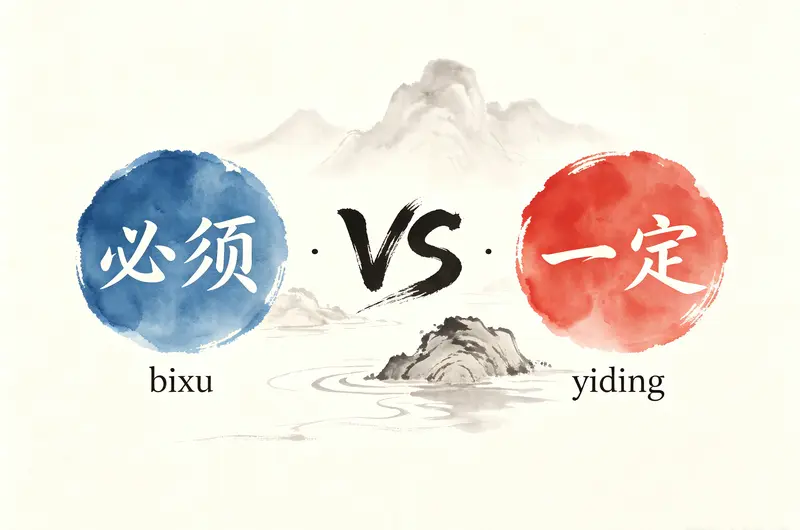
必须(bixu) vs 一定(yiding): What's the Real Difference?
Confused by 必须 (bìxū) and 一定 (yīdìng)? Stop saying "我必须帮你" (I must help you)! Learn the core rule: 必须 is for rules, and 一定 is for promises.
Word DifferencesCommonMistakesGrammarIntermediateCultureTipsHSK3bixuyiding
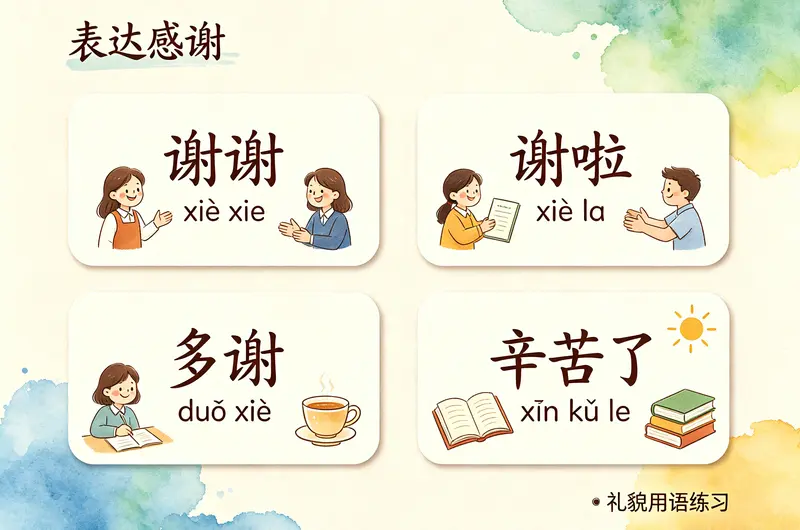
谢谢 Xiexie: How to use thank you in Chinese
In China, saying "thank you" too much can actually make you sound like a stranger. Master the authentic scenarios, variations, and cultural rules of 谢谢 (xiè xie).
Word DifferencesCulturalEtiquetteDailyExpressionsBeginnerFriendlyXiexieCommonMistakes